


MAPE is an experimental platform accredited by Nantes Université and distributed across the LTEN (Thermal and Energy Engineering), GeM, GEPEA (Process Engineering) and IREENA (Electrical Energy) laboratories. It was created in 2023 under the 2021–2027 CPER (State-Region Planning Contract). The project, costing €4.5 million, is part of a drive to develop a more environmentally friendly Industry of the Future. MAPE thus aims to implement new materials, study their durability under harsh environmental conditions (temperature, humidity) and optimise their manufacturing and recycling processes, while taking into account the associated energy efficiency issues. Centred on the materials–processes–energy triad, the equipment will include advanced tools for in situ materials characterisation, facilities for studying polymer and composite materials during their initial manufacturing or recovery processes, and laboratory-scale test benches for energy storage and production solutions. MAPE is structured into 4 complementary and balanced work packages, providing a comprehensive response to the issues addressed:
- In situ microstructural and mechanical analysis tools
- Processes and instrumentation
- Recycling – Recovery
- Energy – production and storage
GeM leads the characterisation and durability component through the in situ microstructural and mechanical analysis tools.
Distinctive Experimental Facilities
The platform’s key originality lies in developing unique expertise in multi-scale in situ characterisation, both mechanical and microstructural, under thermomechanical loading. Its distinctive feature is the adaptability of micro-equipment (furnace and mechanical testing machines) to a high-resolution SEM, an X-ray diffraction goniometer, a nanoindenter and a vacuum chamber equipped with pyrometry and imaging for digital image correlation, enabling multi-scale crystallographic, chemical and mechanical characterisation.
 Equipment List…
MAPE Funders

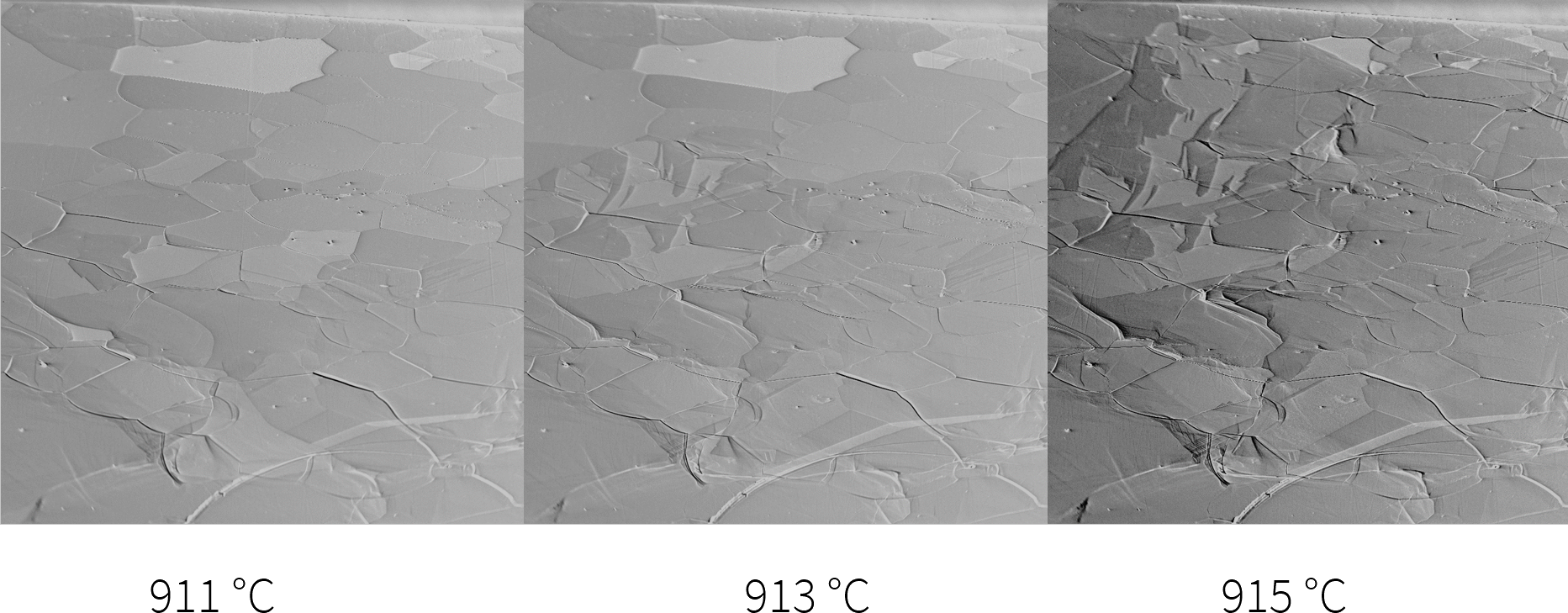
Characterisation of phase transformation during thermomechanical loading in an SEM coupled with EBSD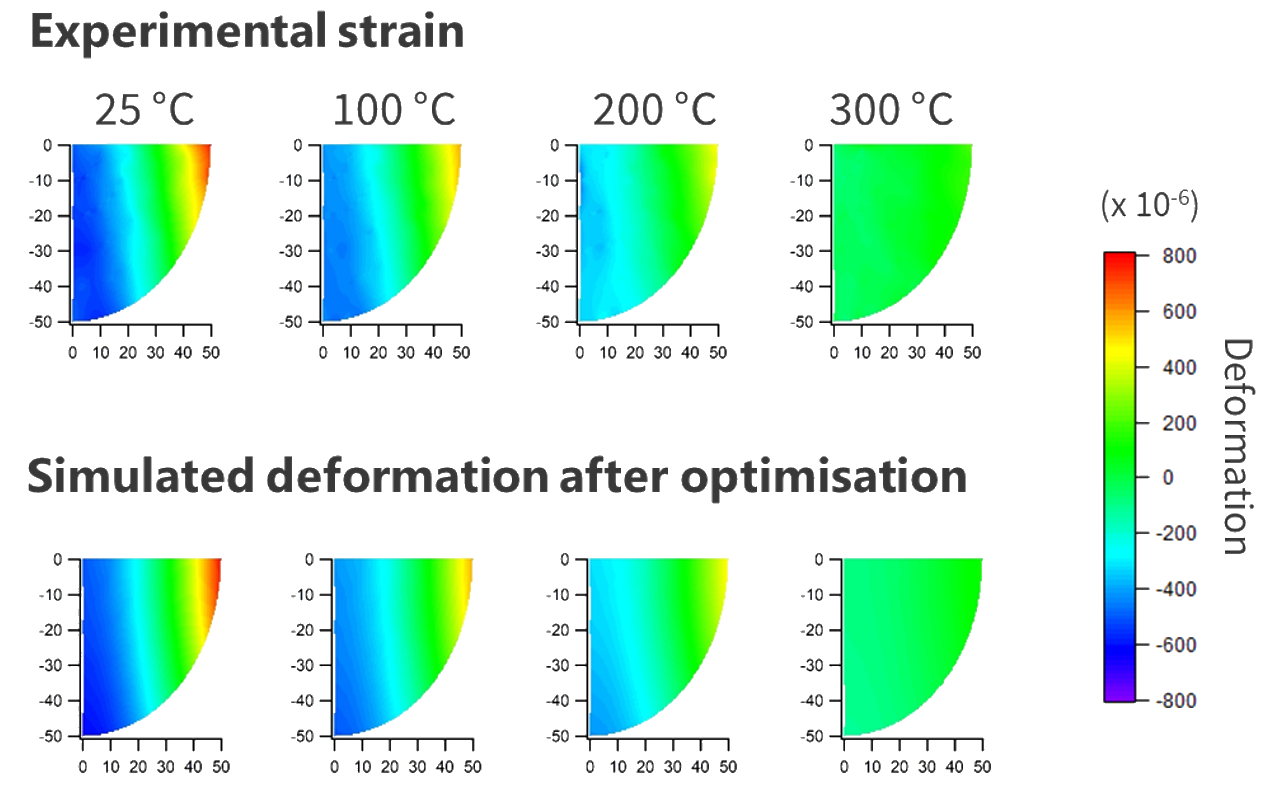 Comparison of internal strain pole figures for the {213} plane family obtained in situ by XRD and by modelling during thermal tests Comparison of internal strain pole figures for the {213} plane family obtained in situ by XRD and by modelling during thermal tests PhD thesis of Inès Addi (MESR) PhD thesis of Inès Addi (MESR) |
PhD thesis of Ambrosio Santiago (ANR MOCAMOR) |
EBSD monitoring of the microstructure during an in situ creep test on an aluminium alloy PhD thesis of Calixte Gautier (CIFRE AIRBUS) |
 |
Characterisation of the moisture content evolution of natural fibre composites throughout the manufacturing process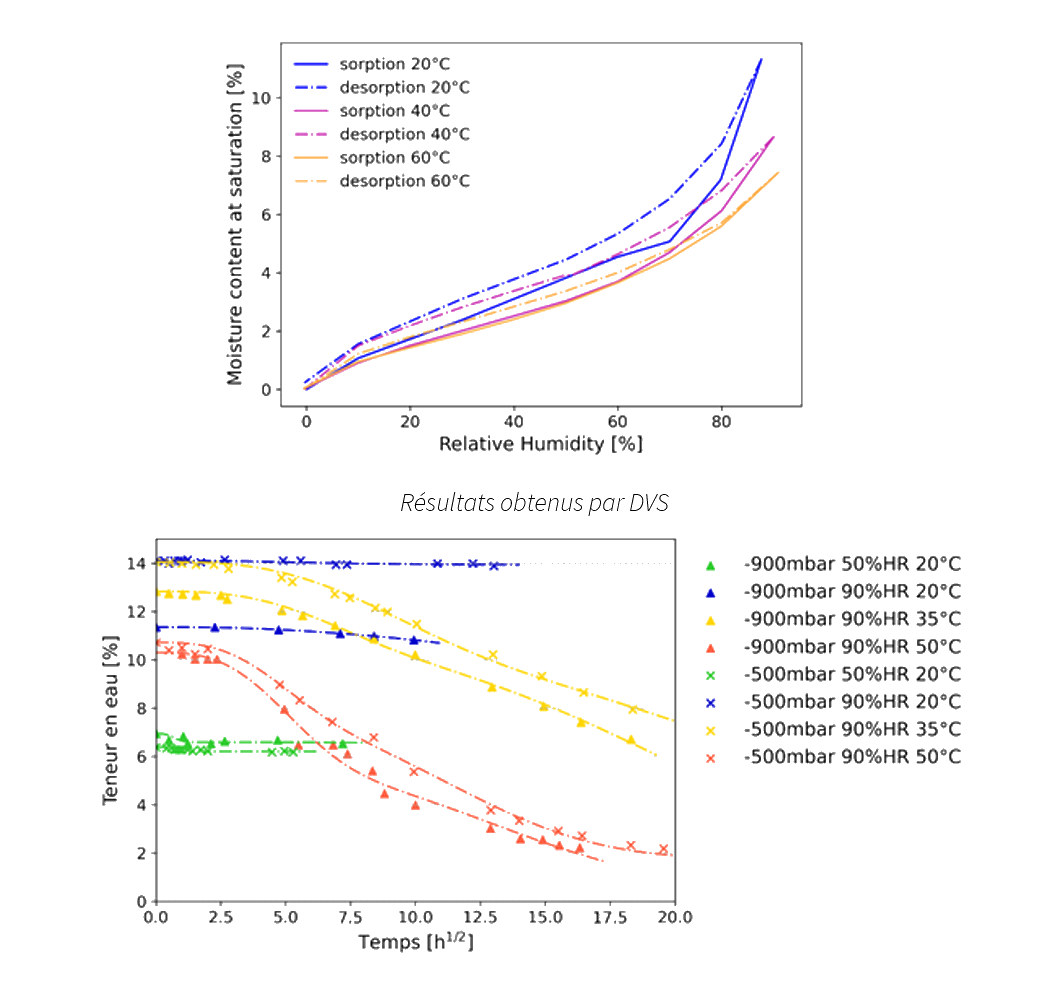 (DVS, climate chambers) (DVS, climate chambers) Characterisation of the evolution of the mechanical properties of a natural fibre composite during resin transformation, as a function of fibre moisture content(DMA with relative humidity and temperature control, conventional testing machine) 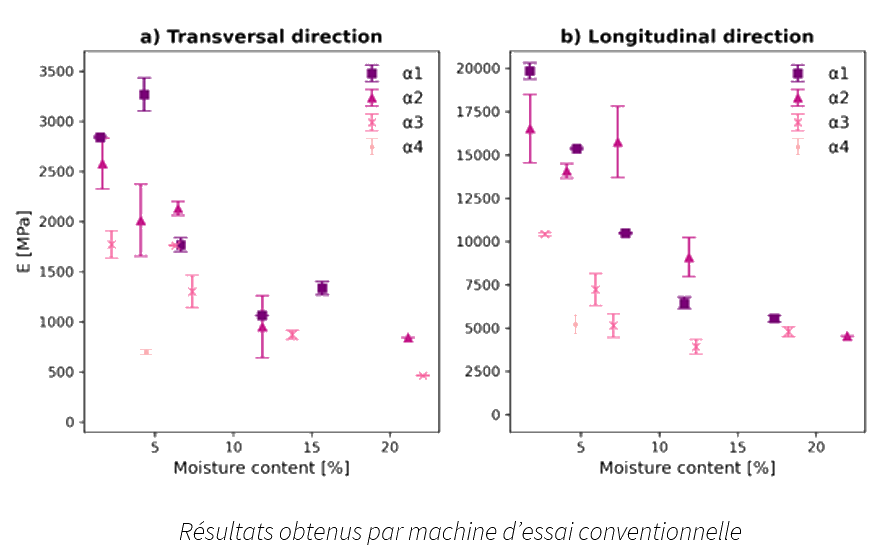 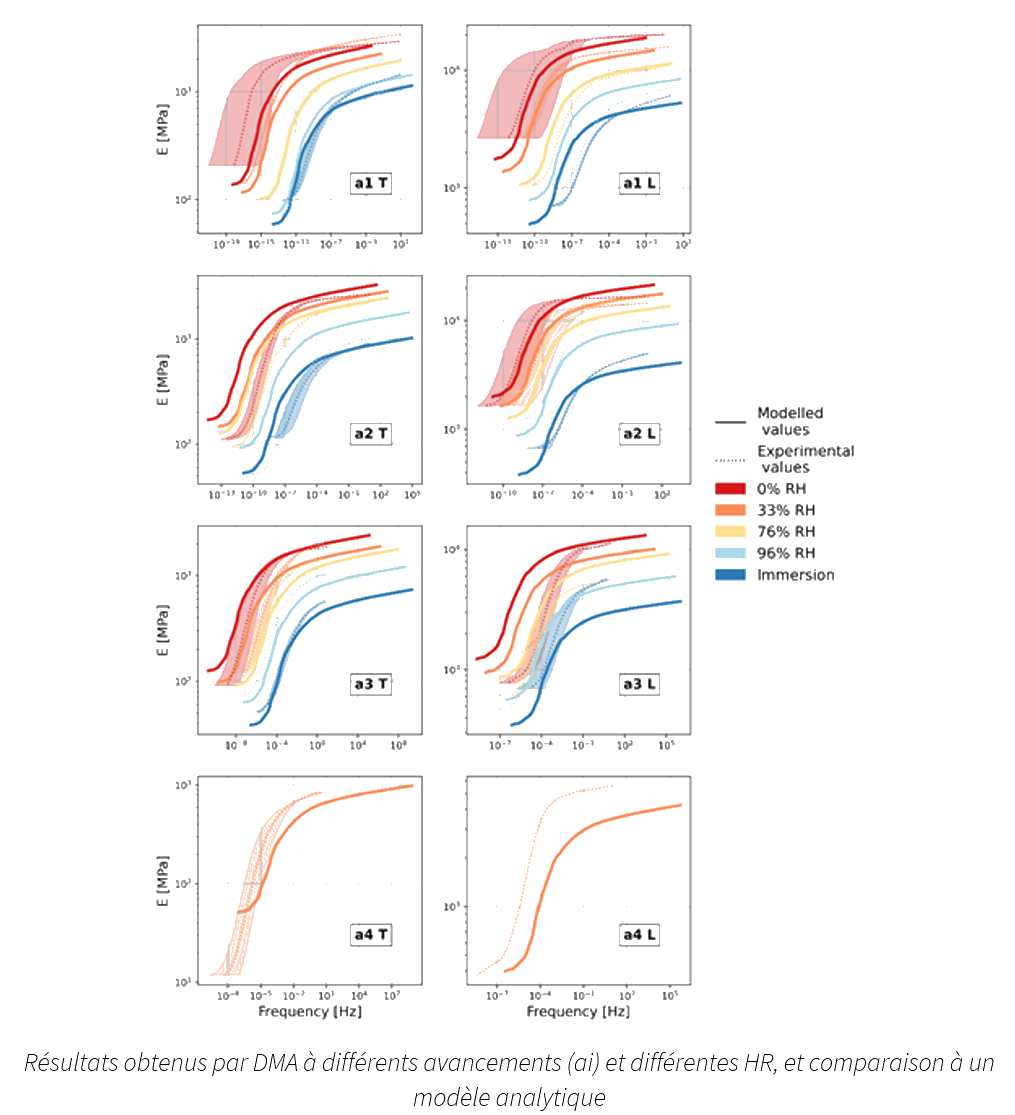 PhD thesis of B. Gaud (ANR MOCOMBIO-MEMPHYS) |
Fields of Application:
The MAPE platform aims to provide coherent experimental support for comprehensive studies of materials production chains, involving recycling/recovery and energy optimisation issues. The platform stems from the specific needs of each laboratory and brings together state-of-the-art in situ or in-line characterisation instruments, small-scale processing/forming systems for thermoplastic, composite or recycled materials, equipment for energy studies (storage/production) and the associated measurement and control systems. For GeM, this equipment makes it possible to reproduce complex experimental conditions within microstructural and mechanical characterisation instruments. This is part of the continuous improvement of system performance and lightweighting within the framework of green engineering. The platform should thus provide a better understanding of process–microstructure–mechanical property relationships and of the deformation and degradation mechanisms at different scales caused by complex loading combining a wide variety of environments (mechanical, thermal, moisture, chemical…) for the study of new materials (metallic, composite, polymer…) in the context of the factory of the future. Studies on biomaterials in the context of the health of the future (e.g. I-SITE NExT) are also being developed thanks to this equipment.
The platform targets industrial sectors involved in (i) the production and recycling of structural materials, with a view to optimising their manufacturing processes and the durability of the parts produced. The targeted sectors are more specifically plastics processing, aeronautics and shipbuilding. Current industrial partners of MAPE include, for example, AIRBUS, Chantiers de l’Atlantique, SAFRAN AE and CETIM. MAPE’s themes are also closely aligned with the concerns of IRT Jules Verne, one of whose focus areas is Materials/Processes, and with which the laboratory has maintained close ties since its creation.
Location: Bâtiment 17, 1er étage, Saint-Nazaire
Scientific lead: Pierre-Antoine Dubos
Technical lead: Marie-José Moya
Contact : Pierre-Antoine Dubos; 02 72 64 87 51, pierre-antoine.dubos@univ-nantes.fr